
BOARDPREP PRESS
Why Philippine Professional Licenses Are Not Automatically Accepted Abroad?
Share this story
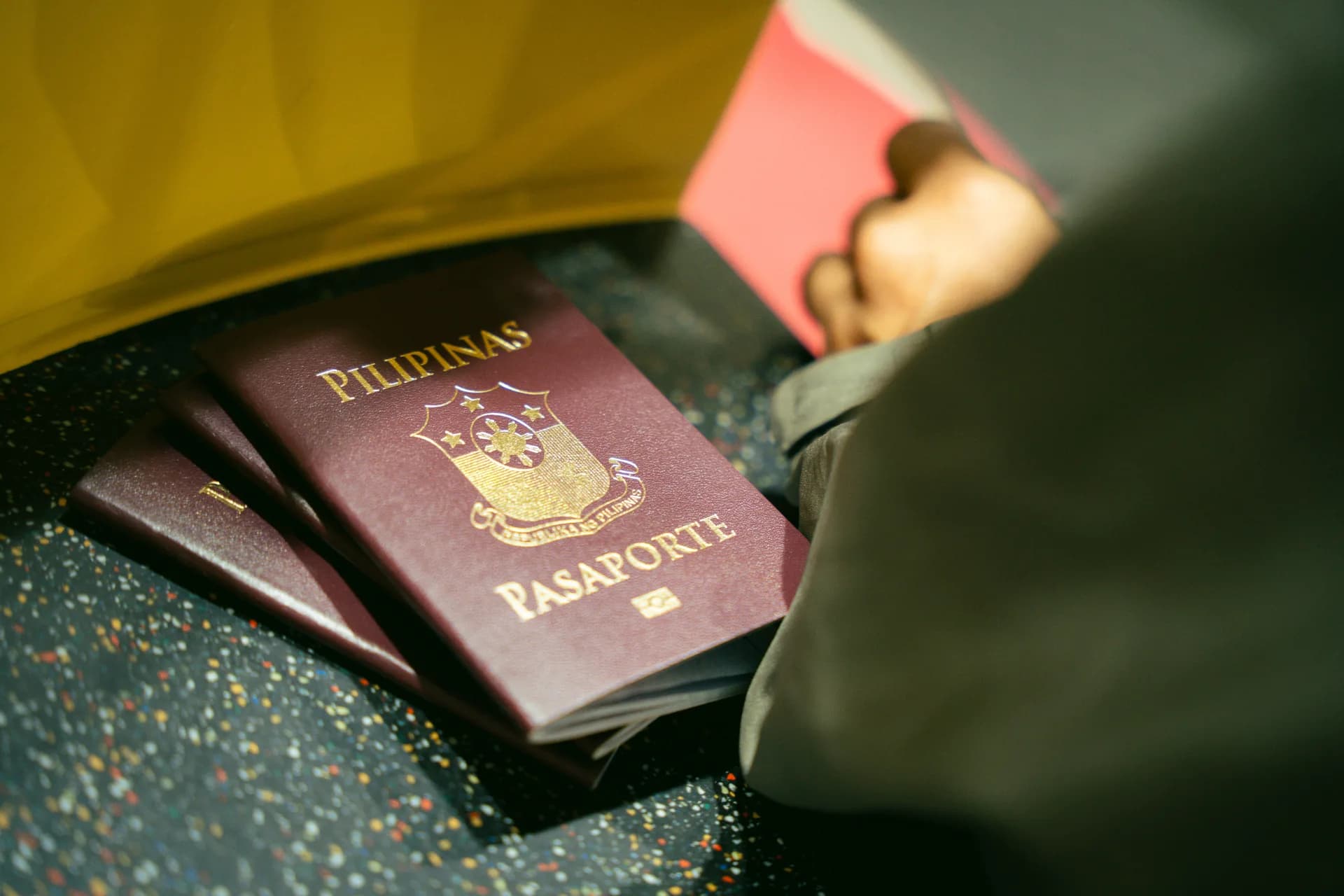
For many Filipino professionals, earning a professional license from the Professional Regulation Commission (PRC) is a major milestone. It is proof that the holder has met Philippine academic, training, examination, and ethical standards for a regulated profession. However, a Philippine professional license does not automatically authorize a Filipino to practice the same profession in another country.
The reason is not that Philippine licenses are invalid or inferior. Rather, professional licensing is a matter of national sovereignty, public safety, local law, and mutual recognition. Each country has the authority to decide who may practice regulated professions within its territory.
In the Philippines, this same principle is embedded in law. Section 14, Article XII of the 1987 Philippine Constitution provides that the practice of professions in the Philippines is generally limited to Filipino citizens, except in cases prescribed by law. The PRC likewise explains that foreign nationals may take Philippine licensure examinations only when allowed by professional regulatory law and when there is proof of reciprocity or an applicable international agreement.
This means the Philippines itself does not automatically accept foreign licenses. It requires verification, reciprocity, and compliance with Philippine regulatory requirements. Other countries apply the same logic to Filipino professionals.
A license is territorial
A professional license is generally valid only in the country, state, province, or jurisdiction that issued it. In the Philippines, the PRC is empowered under Republic Act No. 8981, or the PRC Modernization Act of 2000, to regulate and supervise professional practice in the country. The law recognizes the role of professionals in nation-building and seeks to promote competent professionals whose standards are internationally recognized.
However, “internationally recognized” does not mean “automatically licensed abroad.” Recognition still depends on the laws of the destination country.
For example, in the United States, professional licensure is generally regulated at the state level, so a professional may need to obtain a separate license for each state where they intend to practice. Reciprocity may exist in some professions and states, but it varies widely. In Canada, regulated professions usually require a license or certificate from the relevant provincial or territorial regulatory authority before a person can practice or use a reserved professional title.
Public safety and consumer protection are the main justifications
Countries regulate professions because many professional services directly affect public welfare. Doctors, nurses, veterinarians, engineers, architects, teachers, accountants, dentists, pharmacists, and other licensed professionals make decisions that may affect life, health, safety, property, public trust, and national standards.
Host countries therefore often require foreign-trained professionals to undergo one or more of the following:
credential assessment;
educational equivalency review;
local board or qualifying examinations;
supervised practice or internship;
language proficiency testing;
ethics, jurisprudence, or local law examinations;
proof of good standing; and
work authorization or immigration compliance.
The United Kingdom, for instance, recognizes that many professions are regulated by legislation and that overseas professionals may need their qualifications officially recognized by the relevant UK regulator before practicing. Australia similarly distinguishes general qualification assessment from occupations that require registration, licensing, professional membership, or industry-specific requirements before work may begin.
Reciprocity matters
One of the most important legal principles in professional mobility is reciprocity. Reciprocity means that Country A may allow professionals from Country B to practice if Country B gives similar treatment to professionals from Country A.
The PRC’s advisory on foreign nationals makes this clear. A foreign applicant must establish that the requirements for registration or licensing in the country of origin are substantially the same as those in the Philippines and that Filipinos are allowed to practice in that country on the same basis as its own citizens or nationals.
This requirement explains why a Philippine license alone is often insufficient abroad. Unless there is a reciprocity arrangement, mutual recognition agreement, or host-country pathway for foreign-trained professionals, the Filipino professional must comply with the host country’s licensing process.
Mutual recognition agreements help, but they are limited
The Philippines participates in regional and international efforts to improve recognition of qualifications. Under the Philippine Qualifications Framework Act, Republic Act No. 10968, the Philippines established a national qualifications framework to define qualification levels, support pathways and equivalencies, and align domestic qualifications with international frameworks to support mobility of Filipino students and workers.
The ASEAN region also has Mutual Recognition Arrangements, or MRAs, for selected professions. The PRC lists ASEAN MRAs covering areas such as accountancy, engineering, architecture, nursing, medicine, dentistry, and surveying qualifications.
However, MRAs do not usually create automatic practice rights. They often provide a framework for recognition, registration, mobility, and cooperation among regulators. The professional may still need to satisfy host-country requirements such as experience, documentation, assessment, local registration, or limited practice conditions.
The issue is not uniquely Filipino
The difficulty of professional recognition is a global issue. The same barriers affect many internationally trained professionals, whether from the Philippines, India, Canada, the United Kingdom, Australia, or other countries.
Even within highly developed systems, professional mobility is not always seamless. In the European context, recognition systems exist, but many regulated professions still require official recognition before practice. In Canada, internationally trained professionals in regulated occupations must go through foreign credential recognition processes before practicing.
Thus, the non-automatic acceptance of Philippine licenses abroad should not be interpreted as a rejection of Filipino competence. It reflects the reality that professional regulation is jurisdiction-specific.
What this means for Filipino professionals
For Filipino professionals seeking to work abroad, the practical implication is clear: the Philippine license is an important credential, but it is usually only the starting point.
A Filipino professional should verify:
whether the target occupation is regulated in the destination country;
which agency or board regulates the profession;
whether the Philippine degree and license are recognized;
whether exams, bridging programs, internships, or supervised practice are required;
whether there is an ASEAN, bilateral, or profession-specific recognition pathway;
whether immigration and work permit requirements are separate from licensing requirements.
The Philippine government’s continuing work on the Philippine Qualifications Framework, ASEAN MRAs, and international professional recognition remains important. These mechanisms can improve comparability and mobility, but they do not remove the authority of host countries to regulate professional practice within their borders.
Conclusion
Philippine professional licenses are not automatically accepted abroad because professional practice is governed by the laws of the country where the professional intends to work. The legal justification is rooted in sovereignty, reciprocity, public safety, consumer protection, and the need to ensure that professionals meet local standards.
The better framing is not that Philippine licenses are “not accepted,” but that they are not automatically transferable. Filipino professionals remain globally competitive, but like all internationally trained professionals, they must pass through the recognition, registration, and licensing rules of the host country.
References:
Association of Southeast Asian Nations. (n.d.). ASEAN sectoral mutual recognition arrangements (MRAs). https://asean.org/asean-sectoral-mutual-recognition-arrangement-mras/
Australian Qualifications Framework. (n.d.). Frequently asked questions. https://www.aqf.edu.au/frequently-asked-questions
Canadian Information Centre for International Credentials. (n.d.). Find out if your occupation is regulated or not. https://www.cicic.ca/928/find_out_if_your_occupation_is_regulated_or_not.canada
European Commission. (n.d.). Recognition of professional qualifications. https://employment-social-affairs.ec.europa.eu/policies-and-activities/skills-and-qualifications/recognition-professional-qualifications_en
Government of Canada. (n.d.). Foreign credential recognition program. https://www.canada.ca/en/employment-social-development/programs/foreign-credential-recognition.html
Government of the United Kingdom. (n.d.). Recognition of professional qualifications and regulation of professions: Policy statement. https://www.gov.uk/government/publications/recognition-of-professional-qualifications-and-regulation-of-professions-policy-statement
Professional Regulation Commission. (n.d.). ASEAN MRA. https://www.prc.gov.ph/asean-mra
Professional Regulation Commission. (n.d.). Mutual recognition arrangements (MRAs). https://prc.gov.ph/international-affairs-type/mutual-recognition-arrangements-mras
Professional Regulation Commission. (n.d.). Public advisory on applications of foreign nationals intending to take Philippine licensure examinations. https://www.prc.gov.ph/article/public-advisory-applications-foreign-nationals-intending-take-philippine-licensure
Republic Act No. 8981. (2000). Professional Regulation Commission Modernization Act of 2000. Republic of the Philippines. https://elibrary.judiciary.gov.ph/thebookshelf/showdocs/2/5627
Republic Act No. 10968. (2018). Philippine Qualifications Framework Act. Republic of the Philippines. https://pqf.gov.ph/Uploads/Legal%20Basis/RA%2010968.pdf
The 1987 Constitution of the Republic of the Philippines, art. XII, § 14. https://elibrary.judiciary.gov.ph/thebookshelf/showdocs/45/25555
U.S. Department of Education. (n.d.). Professional licensure. https://www.ed.gov/about/initiatives/international-affairs/professional-licensure